Showing posts with label Amateur Radio. Show all posts

5/28/2019

Emergency communication ~ Amateur radio

Amateur Radio for Emergency communication

InReach is probably the best solution for emergency communication!
However, it is a little expensive!
One of alternate solutions could be Amateur Radio!!

Low cost solution

Although Amateur radio requires a license to use it, it is probably low cost solution in many cases.
One of very low cost radios from China is BAOFENG.  It costs about USD $30.

To get license you might want to check a test schedule in your local area.
You can refer the following link to find out an exam in your area:


Once you pass the exam, you can start using Amateur radio within a few weeks.

What you need to do for the exam is just going over the question pool.


To get Technician license, the majority of questions are a sort of "common sense".  Once you go through the question pool and you may be able to get the license!

APRS (Automatic Packet Reporting System) would be a good method to communicate from Amateur radio to email and text messaging to a mobile device.  It reports your location as well as text messages.  As long as you are on a ridge or a peak, there might be a good chance to communicate even if the area is out of the mobile network coverage.


More reliable communication for an emergency!

I still believe if you really look for more reliable communication method, InReach would be the best solution.  However, the cost is much expensive and you need to pay monthly / annual fee to get the service.  
The coverage is probably much better than regular amateur radio and it has a rescue plan that covers rescue cost as well.
If you are going to really long hiking like John Muir Trail, then InReach would be a better solution!


8/29/2018

Mt. Whitney Hiking 2018 (6) ~ Coverage of Amateur radio


From the summit

Brought an amateur radio .....

Since I got amateur radio license in January this year, I brought a radio to the hiking.   I did not have much chance to use it, but this is a report what the coverage looks like.

Coverage on the road

On the way to the trail head / Visitor center, I enabled APRS when I was driving a car.   I saw many packets when I was in Yosemite.  However once passed Yosemite and got into US-395 where the east side of Sierra Nevada mountains.  I guess it is due to very early in the morning.  (I did not use it on the way back since dead battery).

There is digipeter in Bishop and the station picked my packets on the way.

On the trail?

The trail goes along a creek and it did not seem to be very good coverage on the east side before Trail Crest.   Unfortunately, I did care about battery capacity, I did not turn it on all the way.  I only turned on when I took a rest for a few minutes.  So I am not really sure, but it did not seem that it did not work well, there were no incoming packets and my packets were not picked up any stations / digipeters.   At Trail Camp, I used more time in the tent, however, I heard nothing and no packets were picked up.  I use the standard hand held with 1 W output power.

I saw a few people carried amateur radio, however they used it for a communication within their group.  I listened some simplex frequencies, but I did not heard anything.

Once passed Trail Crest on the main ridge to the summit, it seemed that some of digipeters on the west side can be reached and there was a better coverage on the ridge.

Again, I did not turn it on all the way, so that I am not sure if it is true or not.  But we might not expect much coverage of APRS except the main ridge between Trail Crest and the summit.  I did not check frequencies of local repeaters before the hiking, therefore, I have no idea what the local repeater coverage looks like.   Simplex channels were very quiet and I did not hear any communication at all during the hiking.  It is better to check local repeaters next time.

Emergency usage?

I am considering Amateur radio for a communication method in emergency.  It does not seem to be very good since APRS coverage was not as good as I was expected.  Therefore it might be very limited to use in emergency.  However, it is better to understand local repeater coverage.  I guess it might be useful if I can put some local repeater channels into my radio.  So next time, I will plan this research with some local repeater channels.

(To be continue ...)

6/11/2018

APRS coverage in Butano State Park (California/USA)

APRS Stations near Butano SP (California)

It was 2 weeks ago, I went camping to Butano State Park in Memorial Day weekend.
Butano State Park is located a little south of Half Moon Bay near San Francisco Bay area.  It is a small state park and it is really nice and quiet place.   It was little chilly early in the morning and late in the evening.   However the camp sites were full and there were many people there.

Camping Site

Camping sites are nice.  Most of them have nice shade with big Redwood trees.  This time we could not get a regular sites that we can park our cars next to the campsite.  Our site was a part of "walk-in" site.   Even it's called "walk-in" site, the campsites are not so far from the parking lot.  It is probably a few hundred feet away from the parking lot.  Only problem is there is only one designated parking space near the camp site.  A group who has more than one cars, they have to park a little far on the load.  That is only bad thing we found out.   The regular site typically have two parking space for each site.

Also, there is only one bath room and it is not flash-able.  However it is reasonably clean and I do not see a big problem at all.

Hiking Trail

There are a several hiking trail.  People can arrange a short hiking to a full day hike depending on their demand.   I tried to test APRS with my Baofeng.  It does not seems to be a good coverage at all.   I did not get any packet and all packets I sent out were not recognized.   So it is not good area to use APRS.  (I just using Baofang hand-held radio and a better antenna other than the standard antenna.)

Mobile service is partially available near bathroom of a regular camping site, not the one in the walk-in site.

There is no issue to use simplex channels on 2m band during hiking.   The distance between two groups might be less than a few miles.   I have not tried any repeater from the park.

5/12/2018

SDRplay RP1A ~ SDRuno

SDRuno

SDRuno

SDRuno is a software which is working with SDRplay and a PC will be a receiver.   The software can be download from a web site and it works on Windows.  I just tried this software on Windows 10 PC.  There are pre-configured setups for Amateur bands which are covered with SDRplay.   We can see entire each band in a single display to see if there is any signal in the band.   So we do not have to scan frequency to see if there is any station in a band.   This is pretty nice for me.

Antenna

 Since this is just a receiver, I just using a copper wire in a room as a temporary antenna to check each amateur band.  I cannot receive really weak signals, but I still can see some activities.   Due to sun-spot number is really low now.  Higher HF bands are really quiet.  I cannot see much activities on 20m / 15m and 10m.   I still see some activities on 40m and 80m with the temporary antenna.

I guess if I have a better antenna out side of my house, then I could hear more stations.  Probably, I will set a better antenna some time soon.

Since the current antenna is not very good one, therefore I only hear very strong signals which are probably coming from somewhere not far.  Even though, I think there could not be so many station I expected.   When I did amateur radio, there are so many stations on 40m band.

Anyway, this is really nice device to listen amateur bands, what each band looks like. 


5/08/2018

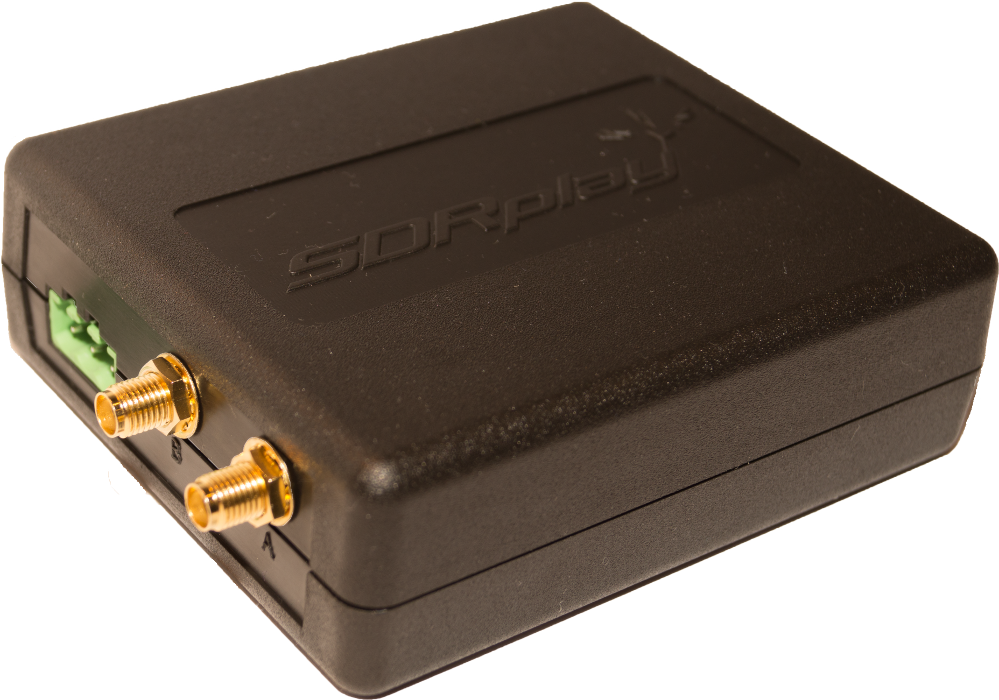
Software Defined Radio (SDR) ~ SDRplay RSP1A

SDRplay RSP1A

Software Defined Radio (SDR)

A several weeks ago, I mentioned this in a posting.  Finally, I bought RSP1A.

After I resumed Amateur Radio, one of things I am really interested in is "Software Defined Radio".  This is really a new thing that did not exist when I was really actively doing Amateur Radio more than twenty years ago.   That days, a general coverage receiver was so expensive and I did not have one when I was student.  However this product is a little above USD $100 ($119.95 is my purchase price) and it will cover 1kHz to 2GHz with all mode (AM/FM/CW/SSB ...).  This is really reasonable price to play!

The basic idea is using A/D converter to sample RF signal to digital and all rest of signal processing is done by a computer (PC) through USB interface.  Then the PC will be a nice receiver.   Actually, many Amateur Radio from major vendors are using this technology nowadays.

Good to know what the other amateur bands look like 

Although I resumed amateur radio, I only have a cheap Chinese radio "BAOFENG" which only can cover FM on 2 m / 70 cm bands.   I do not hear many stations in my local area.  I just wonder if there are many stations in the other bands.   When I was active in Japan about 30 years ago, there are so many stations in any bands.  I really want to know which band would be better band to find out many stations here.   However to buy HF radio and set up a large antenna require a lot of money.  So that I want listen some bands before I actually setup them.  That is one of motivation.

The other interesting area is to see spectrum and water fall display with this.   Some of nice HF radio has this feature.  However all radio I tried in the past did not have such feature.  I am really interested in what it looks and how it works.  The software for this product has this feature.

I just got it.  So I will post something related this product!  I think it will be fun!


4/04/2018

SDRplay ~ Software-Defined Radio

RSP2 and RSP2pro

SDRplay RSP2

   I usually post a similar contents both in Japanese version and English version.   However, I post different contents here.   Since the post in Japanese is just talking about amateur radio life here in Dublin / California comparing with my old amateur radio life in Japan about 40 years ago.

   It's been for 3 months since I got a license in the US.   Since it might be hard to have HF antenna and radio in a short time.   I just bought a cheap transceiver BAOFENG.   Originally, I thought there might be many stations in V/UHF bands because it is very limited usage in HF for Technician class.   However, I watch 2m / 70cm bands daily, I cannot hear a lot of activities.   I guess very limited stations on some specific repeater are talking daily.

   Anyway, therefore, I really want to see what the other amateur bands look like.  Also I am interested in SDR (Software-Defined Radio).   Based on my research on the internet, SDRplay might be one I try to get.   There are some different model and I have not decided which one I will buy.  But I am thinking this might be my next project to get it and report what it looks like.   In a short time, I will try to get it and try to have a simple antenna for HF. 

3/27/2018

APRS ~ the packet is not recognized in some location


APRS stations near Brentwood
(There is one DIGIPEATER on Mt. Diablo)

  After testing APRS a couple different location, it seems that it is hard to send out the packet in some locations.   In my commute route, somewhere between Fremont and San Jose is one of locations.   I also went to Brentwood where might be a similar.
   For the commute route, it does not depends on the output power.  Even if I set the output power higher which is 8W instead of 1W.   I do not see much improvement.   It seems that it is just because more traffic.   From home to Fremont, almost all locations I sent was recognized, but after Fremont, probably a half of sending is missed.   A similar thing happened in Brentwood.   I tried to use 8W in Brentwood, it does not seem to help.   Instead of using higher power, it helped sending more frequently.   Then one out of ten was recognized.  In Brentwood, I did see more packets were going on.   If there is a lot of traffic, I guess using hand held might be some disadvantage.   Many mobile radio or base station might be more power something around 25W to 50W with probably a better antenna.
   It might happen when I use it on a trail.  Even if the location is better, it might be a similar situation.   So I really need to go hiking to try to see if it is still useful or not.   Originally, I thought it can be picked up if a DIGIPETER or IGATE station are reasonably close.  But it does not seems to be. 

3/20/2018

APRS - sending SMS message


SMS message from APRS

I was looking for a way to send a text message in the both direction from / to amateur radio.  The one I mentioned in the previous post is one-way communication from an amateur radio to a mobile device via E-mail.   We cannot reply to the message on the mobile device side.   That is a big limitation for the communication.

After I checked the web site of APRS, there is another service through SMSGTE (APRS/SMS Gateway).   This method provides communication in the both direction with some limitation.  I think it works.

Here is how it works:

  1. Using "SMSGTE" instead of a call sign when people send a message
  2. In a message body, inserting "@xxxxxxxxxxx " (xxxxxxxxxx is a phone number) to specify the destination of SMS message.
As long as the packet is going through to APRS-IS via IGATE station, a message can be delivered to a mobile device.   Also the person who received the message can reply to the message with in 30 minutes from the last message.   I tested this scheme in some different location with disabling cellular network data.  Now this might be a way to send a message even if a cellular network is out of the range.  Now APRS is probably very useful on a trail during hiking.

If you carefully look into the site, the service is provided in limited region.  The United States is one of countries where the service is available.

  • We can send out a location information periodically and people can trace the location from the internet.   (To trace the location history, no amateur license is required)
  • We can tell stations who is close to the current location.   Call-signs are listed and they can exchange messages each other.  It is probably useful to contact those station in case people needs some assistance.
  • We can send SMS message to any mobile device. (limited countries)
To use APRS, people need to get amateur radio license, but I think it worth to get it.   It helps a lot in case something happens during hiking in an area where a cellular service is not available.

3/18/2018

APRS ~ Text message


Text message exchange
   APRS is not only tracking a location, but also sending messages.   I have not really test to exchange messages between amateur radio stations listed on the software.   I think as long as the both stations are in a range to communicate each other, it should not be a big problem to exchange the message.   However, I am not really sure if we can send a message from a radio to a station on the internet.  Basically a smart phone software "PocketPacket" can be used with the internet connection.  Therefore I thought I could send a message from radio to such station.   Based on my simple experiments, it does not seems that the message is really going through.

Email from a radio

   However based on an internet search, it is possible to send out an email.  Just using "EMAIL" as receiver.   For the US cellular carrier, it is also possible to send a text message as well.

  • Sprint: [insert 10-digit number]@messaging.sprintpcs.com
  • T-Mobile: [insert 10-digit number]@tmomail.net
  • AT&T: [insert 10-digit number]@txt.att.net
  • Verizon: [insert 10-digit number]@vtext.com
The email address is a part of a message body like, "xxxxxxxxxxxx@vtext.com test message"
I tested this method and works, as long as the packet is picked up digipeater / iGate, then the message was delivered.   The problem is the receiver could not reply the message.

I still need to learn how the message could be sent out to a station....

But at least, a text message can be sent even if an area is out of cellular network.  It is still useful.


3/13/2018

APRS experiments ~ potential concern for low power transmission


Low Power Transmission

   Now I am testing APRS with BAOFENG UV-5R / iPhone.  I found one potential concern during this experiment.  Since I am considering to use APRS during hiking and it will be a long operation during hiking.  It could be more than a several hours.  To save the power, I try lower power.

   From my home, digipeaters near my home can pick up the signal even if I transmitted 1W.  So I started using 1W output power to track during my commute.   It seems that it works well near home, however some packets are not recognized if the location is close to my office.   I saw a couple packets are missed, probably around 50% is not recognized.  (It can recognize packets sent by digipeaters.)

   Here is my best guess.   Since APRS is using the same frequency (channel) to send a packet, it is possible to conflict some packets almost at the same time.  If other stations sending them with higher power / efficient antenna, a weak signal which was sent by lower power / inefficient antenna might be overridden.  This is probably a nature of FM signal and traffic on APRS channel near my office is much more than around my home.

   To understand more, I think I need more data with different power.  I will continue to correct more data to understand this.


3/11/2018

APRS ~ Test from home with rubber ducky antenna

   Today, I tested APRS with BAOFENG/iPhone from home in daytime.
   There are two digipeater near my home.  Based on information on "https://aprs.fi", one digipeater is about 5.3 miles from my home and the other is about 16.1 miles from my home.  Since I do not have any base station antenna, therefore I just use the rubber ducky antenna in a room and set the output power as a low power (1W).

   It seems the both digipeaters can pick up my APRS packet and I can see some packets from other station through those digipeaters.  At least it works around my home with low power setup.  Also, today, I did not see any unexpected transmission at all.   I guess some setup yesterday might not be right.

The current setup is:

On PocketPacket:

  • VOX trigger is 400msc
Radio:
  • VOX setup value on BAOFENG UV-5R is "10"
  • The volume is middle position
iPhone:
  • Volume setup is the maximum on iPhone
It has been running more than 2 hours and I saw some stations near home.  The next step is trying to use this on a trail.

3/10/2018

APRS ~BAOFENG UV-5R with iPhone App "PocketPacket" ~ It works!

APRS setup with iPhone

BTECH APRS-K2 Cable

  I got a cable to connect between BaoFeng UV-5R and iPhone from Amazon.  I tested this configuration today.   It works!  I can send out a packet with a location information to digipeaters and I also can receive from other stations.

  I guess this might be one of low cost solutions to use APRS through amateur radio, not rely on a cellular network.

Here is the configuration:

  1. Radio (Transceiver): BaoFeng UV-5RTP
  2. TNC modem: iPhone 5 + PocketPacket
  3. Cable (between the radio and iPhone); BTECH APRS-K2


   It is not like a solution with all-built-in radio from YAESU and KENWOOD.  However, just thinking about the cost, it is probably OK.  However, it might not be very convenient when I am on a trail.  Since the setup needs to be dedicated for APRS and to do a regular QSO, we need to disconnect everything and using as a regular mode.  Also, I mentioned the previous post, iPhone will consume a lot of power due to GPS.  Therefore, we might need an external battery to feed power to iPhone since GPS function always needs to be enabled.   Those are potential concern.

Other observation

   I saw sometimes the radio transmitting something unexpected.  I do not find out why.   However, I saw a couple times even PocketPacket transmitting is disabled.  When I just connect headset instead of the cable, I could not hear anything.  Therefore, currently I have no idea why the VOX switches to transmit something.   Most of time, it works well and I did not see this symptom.  But it happens sometimes.   I will spend some time why it happens, but currently I do not have any ideas.


3/05/2018

APRS -- Easy solution ~ iPhone App

   I mentioned about APRS (Automatic Packet Reporting System) a few weeks ago.   I am looking for a solution for my future hiking to trace my location during hiking.   In case something happens to me, it can be a way to help to find out where I am.  That is my motivation to use APRS.

   There are some handheld radios which has built-in APRS features, but the price of the radios are expensive.   For long term, I am considering to get such radio in the future.   However I am looking for something low-cost solution for short term.

iPhone App - "aprs.fi"
   I think one of lowest cost solution is a smart phone application.   There are some applications in AppStore.   My smart phone is an iPhone and I did not search Android apps.   "aprs.fi" is the one which is listed as the first app when I search "APRS" in AppStore.   It is USD $6.99.   It is an application on an iPhone to send the location information through cellular network, not through amateur radio.   Therefore, it won't work if a location is not covered by a cellular network.  It is different from one going through amateur radio.   Even though, it is still useful to use in local trails where majority of trails are still covered by a cellular network.

   There is a limitation that the location information is not really report to APRS-IS servers.  Therefore if people is not using the application or "https://aprs.fi" site.  The location information is not shown on the other application for APRS.   As long as people use those application, it is not a problem.   The setup is easy and this is probably an easy solution for most of local trails.  Since this is using a cellular network and utilize its data plan.  I think each data size is not really big, however if the interval to send the location information is short and long hiking, it will use some amount of data. 

Another App - "PocketPacket"
   Another iPhone application I tried is "PocketPacket" which is USD $4.99.   I think this application would be lower cost and better.   The setup is a little more than "aprs.fi".  However this application sends the location information to APRS-IS servers and any application can see the location.   So this is less limitation.   However, to send the information APRS-IS servers, it might requires "passcode".  (I am not really sure, but I think I get error without the passcode.)

   I just did an internet search and a site can generate a pass code with a call-sign.  The URL of the site is "apps.magicbug.co.uk".   I found it by a Google search with "APRS passcode".

The next post will talk about a way to send the location information through amateur radio!


3/03/2018

Mobile antenna installation - NAGOYA UT-72

NAGOYA UT-72

   It's been for a month after I bought BAOFENG UV-5R.   I've been listening (watching) 2m / 70cm bands during my commute.   However, "rubber ducky" antenna is probably not really good especially using inside a car.   Therefore, I was looking for an external antenna to improve it.

   Since I do not have a nice mobile transceiver and I am just using the cheap handheld radio, I do not want to have really nice mobile installation.   I just looked for an easy way.  I also have another car which is primary used by my wife.  So I just want to have one which is easy to move one to the other.   When I search on Amazon, there are some cheap one starting from a little above USD $10.   Based on the review, it seems to be really cheap and I just pick one with a little more cost.   It is still under USD $ 30.

   Here is what I picked.   "NAGOYA UT-72"

   Based on the description on Amazon, the height is about 19-inches and getting more than 4 dB gain.  The magnet base is 3.25 inch and it is stable enough even I drive on a free way.  Installation is pretty simple, just put it on the roof and routed the coax through a gap around a door.   The end of coax is PL259 and a jumper cable to convert to SMA female (the radio side is SMA male, which is different from a common connector of major Japanese manufactures).   Therefore, it can be used when I buy a mobile radio in the future.

   It is hard to quantify the performance, but obviously it is improved.   I can hit more repeaters from my home and office.   Also, the reception is getting much better.   Just think about the price, I am happy with this antenna.   Currently, I do not have any base station antenna at home.  Probably, I also want to have an antenna at home as well.


2/23/2018

Mt. Whitney Lottery 2018

Mt. Whitney Trail ~ June 2016

   Mt. Whitney Lottery is now open through March 15, 2018.   It stated on February 1 and I just filed my application today.  Whoever plans to hike there this year, it is better to try to file the application before March 15, especially people who wants to hike during weekends.  It is usually hard to get it after the lottery.   To maximize the chance, it is better to do.

   Last year, there were many personal activities in summer time and I could not make it.   This year, there are a couple things I would try to find out:


  1. Try to capture my heart rate during sleeping in high elevation.  This was originally planed last year, however I could not be there last year.  Therefore, I really wants to see what my heart rate looks like during sleeping in higher elevation with my Garmin fenix 3 HR.
  2. Try to find out Amateur radio repeater availability on the trail.  Since I got amateur radio license and I am looking for how much useful amateur radio during such hiking.   Since the mobile network is not available most of the trail.   So, I want to see how much repeater access and APRS service available in this area.
  I hope I can get a permit one of weekends I put in my application!


2/18/2018

APRS for hiking and back country skiing


Tracking locations with APRS 

   The other thing I am interested in using amateur radio is APRS (Automatic Packet Reporting System), especially GPS information.   There are many similar system using the mobile network.   However, there is still a lot of area in mountain where any network is not covered.   Using amateur radio to sending out the location information and tracked by somebody else.  I think it helps rescue in case something happens during hiking and back country skiing.

   Since I sometimes went hiking / skiing alone and avalanche beacon might not be very useful if anybody does not see the accident.   However, this APRS GPS information might help to find out a rough location where the accident is.  It might be too late to rescue a person...... 

   Based on my research recently, there are a couple amateur radio hand held transceivers which can support APRS with GPS information.   The price is a bit expensive with the feature, but I am really interested in the feature.  So I am considering to get one some time and tried how it covers in areas I often go.   There is some digital transceivers made in China have GPS feature, but it is not very clear if they ca support APRS.  Some articles on the internet says it works, but it is not very clear it is really works.   The price for those Chinese transceivers are not very low cost like BAOFENG analog transceivers I got.   So I might need to do my research more.  Please advice if anybody has a better experience to use the location service with APRS.

2/17/2018

Echolink ~ Virtual Amateur Radio!?


Amateur radio without any transceiver
   People can get an amateur radio license or a call sign without any transceivers in the United States.  It is different from some other countries such as Japan.   I used to have a call sign in Japan.  However it requires to have a transceiver in hands.
   I do not know the situation in other countries, however just comparing a law in Japan, the cost to get a call sign in the United States is much lower than Japan.   The cost in the United States is just a fee of the exam.  As long as people pass the exam, they can get a call sign shortly without any transceivers in hands.   However, people need to spend for exam, all registration, buying transceiver and etc.  The total cost will be more than a several hundred dollar. 

Echo link ~ Virtual Amateur radio!
    That is the background of the licensing system in the United States.   Now, today’s topic is “Echolink” which is a sort of VoIP (Voice over Internet Protocol) such as Skype, Google Voice and etc.  The primary difference is that all users must hold a valid amateur radio license.   Also, people can access through a repeater which has the internet connection from a hand-held transceiver.   It is something similar as Skype / Google voice link to a public phone network.   Echolink uses amateur radio instead of the public phone network.
   This is not a new technology.  It was introduced sometime after I stopped amateur radio around 2000.  If we search this on the internet, there is a log of information showing up.   As I mentioned that I resume amateur radio recently and I am trying catching up the recent amateur radio world and I found it.   Since all users are amateur radio license holders and it seems like a typical amateur radio communication.  Therefore, I feel like this is a “Virtual Amateur Radio”, just replacing a real transceiver with a smart phone or a PC.

I have just tried it!
    It seems to be very interesting and I tried it.   For detail information, there are many information on the internet.   I just briefly introduce the overview.   The software can be downloaded from Echolink Site.   For Smart phone, it can be available on AppStore or GooglePlay.   One tricky thing is that it requires a public IP address and IP address which is assigned through WiFi or router is not public address.  Thus you might need to setup a proxy.   Installation itself is very simple and you need to register with your call sign, email address and password.   Then they probably ask to show the proof of the license.  In my case, I just needed to send a copy of my license and it was activated in a short time.
   Once your account is getting active, you can see many users all over the world.  I think number of the users in the United States is the largest.  I also see many users from Japan where is my home country.   I tried to listen some conversation on conferences and repeaters.  One of stations found me and I had a chance to talk a station in Japan.   The communication is really the same as what I did in my old days. 
   I have not tried to use it through a local repeater.  It is possible to send DTMS command to repeater to link the repeater over echolink and communicate wherever I want to talk through a small hand-held transceiver on V/UHF.

Easy to start!
    I just share my experience, but back to the original topic, it is really possible to start Amateur Radio without any transceivers in the United States.  I think that is a big thing.  Since the internet / smart phone are very popular nowadays, therefore without any extra cost other than the exam fee, people can start Amateur radio without spending much money and time.  This is really cool!
   The issues when I started amateur radio when I was a kid are “a large amount of money” and “setting up antennas”.   There are a lot of registration process / fee with buying a transceiver to get a call-sign in Japan.   Also setting antennas are a lot of limitation for the space especially HF bands.   Since HF antenna is usually large due to longer wave length in limited space in typical Japanese residence.  Therefore I guess many people compromise to pick V/UHF instead of HF for smaller antenna or just having a hand-held transceiver for outdoor use.   So, talking with station oversea is very difficult for many people.
   A good thing for Echolink, it is very easy to get into Amateur Radio World and communicate all over the world.   All stations are not on Echolink, however there are still many station you can see on Echolink from many different countries.   It is a good experience to communicate with them without a lot of effort / investment.   It is probably just USD $15 in the United States if people can pass the exam for the first time since the internet, smart phone and PC are very common nowadays.
   The exam is easy.  I do not believe it requires really special knowledge to get Technician class.  Just a basic rule, unit conversion, simple calculation with ohm’s raw and memorize some words.   It can be pass if people get correct answers more than 26 out of 35.   Just memorize the answer of the question pool which have a little more than 400 questions.
    Echolink is probably a good entrance to Amateur Radio World.   Also, there is some low cost hand-held transceivers are available on Amazon in the United States I already mentioned in my past posting.  I think people could start amateur radio with really minimum cost and I guess it is a good thing people may try.


2/11/2018

70cm / 2m band in the United States ~ with BAOFENG UV-5Rxx

BAOFENG UV-5Rxx

   I was watching 2m / 70cm bands with BAOFENG UV-5Rxx in San Francisco Bay area, so called "Silicon Valley".

   I used to have a license in Japan around 30 ~ 40 years ago.   I found out a similar people write a blog to resume amateur radio recently.  I am one of them.....

   Since I got a license in the US and I started looking for what type of transceivers are available in the market nowadays.   Before getting the license, I sometimes heard that the population who enjoy amateur radio is decreasing and the price for the equipment is increasing.   However, the price for entry model of HF transceiver is still less than USD $1000 and the price is a similar as when I stopped it.  The main difference is many models are combined with 50MHz (6m) with HF and there is no single band all mode transceivers for V/UHF.  Majority of V/UHF models are FM  transceivers.

   The one I just got is 144/430MHz hand held transceiver and I started watching those bands.

Band Plan in northern California

   The band plan in this area, northern California, 144~148 MHz and 420~450MHz.  However assignments for simplex FM is 26 channels in 2m band and only 3 channels in 70cm band.  The rest of assignments for FM is for repeaters for those bands.  I have never heard any QSO in simplex.  All QSOs I heard were through repeaters. 

   The other questions come up are where technician operators are.   Since they only allows above 10m bands excepts some CW bands in HF.   Therefore I thought majority of them are using V/UHF.  However, V/UHF FM bands are really quiet even if early evening and weekends.  Based on statistics, more than half of amateur radio stations are technician class.  I just wonder where they are.

   Thus, it seems that it is not easy to contact many stations in my local area.   Probably, I need to go to HF.  However, I might not be able to go HF any time soon.  Because it might be hard to setup HF antenna at home.   So I will continue to look for something in V/UHF.   It is probably all right to use it for a communication with my son during hiking.  Other than that, I am considering to check a local amateur radio clubs.

2/04/2018

BAOFENG VHF/UHF dual band tranciever - UV-5R

BAOFENG UV-5R

Got inexpensive tranciever BAOFENG  UV-5R

   Since I got amatuer radio licence recently, I bought an inexpensive VHF/UHF dual band tranciever BAOFENG UV-5R as my first tranciever.  When I was doing amatuer radio in Japan is more than 30 years ago and I have no idea what the recent situation.   I started looking for a tranciever in Amazon and I found a low price one, which is BAOFENG bland.   It is starting someting below USD $30.  There are some famous blands like YAESU, KENWOOD, ICOM and etc.  They are really familar.  However their price is much more expensive.  Even a handy type tranciever, it is starting more than USD $100. 

   Based on internet search, it seems that they are not too bad and I decided to get two including one for my son who also got the license recently.

Initial impression

   My initial impression is good!  With that cost, it is more than expected.   It works good.   Based on some articls, people recommend to get a programming cable through PC.   I also got it and there are many articles which show how to program on the internet.  I followed them and it is really easy to program channes.  Even if just using the key pad to manually program channels is not so difficult.  Just initial programming for local repeaters, I would think I do not need a cable if the programming is just once.

Local activities in 2m / 70cm band

   I live in Tri-valley, where is Pleasanton / Dublin area in Alamenda county near Silicon Valley in California.   Based on my experience to watch the bands last several days, I did not hear much activities.  I guess it is probably due to no-exteral antena.   However, if I visit San Jose area, I heard more activities.  So I guess there might not be many stations in my local area.   I thought there might be more activities in those bands.  That is my impression in the first week.

   The other impression is not much activities in FM simplex channels.   Most of activities I heard was through repeater.    I probably need more time to figure out how I can get into the amatuer radio community in my area.

   Anyway, I finally get into amatuer radio world in the US..... Let's how things go.....


12/22/2017

Licence of amateur radio station in the USA ~ I will try to get it!


   Recently, my son got a licence of amateur radio station.   I do not believe that most of young generation kids are interested in amateur radio since the internet might be much convenient and fun for their communication.  It is probably different from when I was a student long time ago.  However, I do not know why, but he is interested in amateur radio.

   The license is getting changed a lot recently.  There are only 3 classes of license, "Technician", "General" and "Extra".   There is no morse code related test any more.   My son got "Technician" this time.

Licensing Exam

The exam is total 35 questions and more than 74% of correct answer is required.  Each questions has 4 selections of answer and pick one of correct answer.  The questions include regulations and technical questions.   The exam my son took was in a fire station with hosted by volunteers.   If a candidates pass the exam, then the information will be registered in the FCC database with Call-Sign.  Then they can start operating amateur radio right away.  This is very different from the regulation in Japan. 

    He passed "Technician" and he allows to take "General" exam, but he could not pass since he did not study it at all.  In case people wants to get higher level license, they have to pass all exams from "Technician"   It seems that people can take exams in the same day.

I also plan to take exam ...

Here is today's topic.  Since my son got the license, I also want to get one.   I have a license issued by Japanese government about 40 years ago.   Based on the regulation, I could do it with Japanese license.   However, it is probably interesting experience for me and I want to take the exams to get "Extra" license here.    Thus, I just started checking the questions in the past.   Since I study this area about 40 years ago, the contents is changed a lot!

   Regarding the regulation, it is basically the same for international regulation.   However regulation in the USA is different from Japan and some of term in the regulation is not typical words I usually use in the daily life.  Therefore I probably need to learn the term for this exam.   For technical related questions, I learned it before and I probably understand majority of questions.  But the style of question is very different from what I took the exam in Japan.  Also some new technology such as data communications and etc, I probably need to learn more to pass "Extra" class.   I am on the border line to pass "Extra".   I guess I might be able to pass "Technician" and "General" without much extra effort.  However, to pass "Extra" I might need to spend some time to learn some areas.

   Here is a site of ARRL (The national Association of Amateur Radio) where we can find the questions in the past.   It seems that this is a new project and one of my objective for the coming year!