Showing posts with label GPS watch. Show all posts

6/11/2019

Good training after age 40! ~ Don't do training too much!


Good Training after age 40!

I usually run a few times a week last a few years and it might be a good for me.

I resumed running when I was 40 years old.
Originally, my goal was sub-3, which is less than 3 hours for full marathon.
I run about 200 miles a month to achieve the goal.
Unfortunately, I have not achieved the goal after 40 years old due to injuries.

I guess it was probably all right the first a few years.

However, I was getting old and my body cannot recover well in a short time.
That was the primary reason I kept injured.

The problem was once I got injured, I had to stop running for a while.
After resume the training, it took longer time to recover the original fitness level for a long time.

Key is to avoid injury 

Especially after 50 years old, it is very difficult to recover the fitness level before the injury.
Therefore, to keep a similar fitness level, I need to continuously train regular basis.
That is really the key.

Probably, it might be too much to run long distance every day for most of people who is over 50!
There might be some exceptions, but it might be true in general.

Tip for training after age 50!

Here is some tip based on my experience!
  • Follow a training plan - There are many free training plans in the internet!
  • Using some measurable index for training
  • Having one or two resting days
Training Plan 
I am using a training plan in "Garmin Connect".  You need to register the web site, but there are many training plans and they are good to avoid over training.

Measurable index
Some model of Garmin Running device, such as Forerunners / Fenix, has a feature to show a recovery time based on the strength of training.  I guess it might be a conservative side, but it is probably good indication to have the next training for people who is over 50!

Based on the data, the typical frequency of training for me is somewhere around every 2 days or 3 days.

Resting days

Other than recovery time, I set at least one resting days once a week.

Good to have monitor your activities!

It is always good to have a way to monitor your activities!

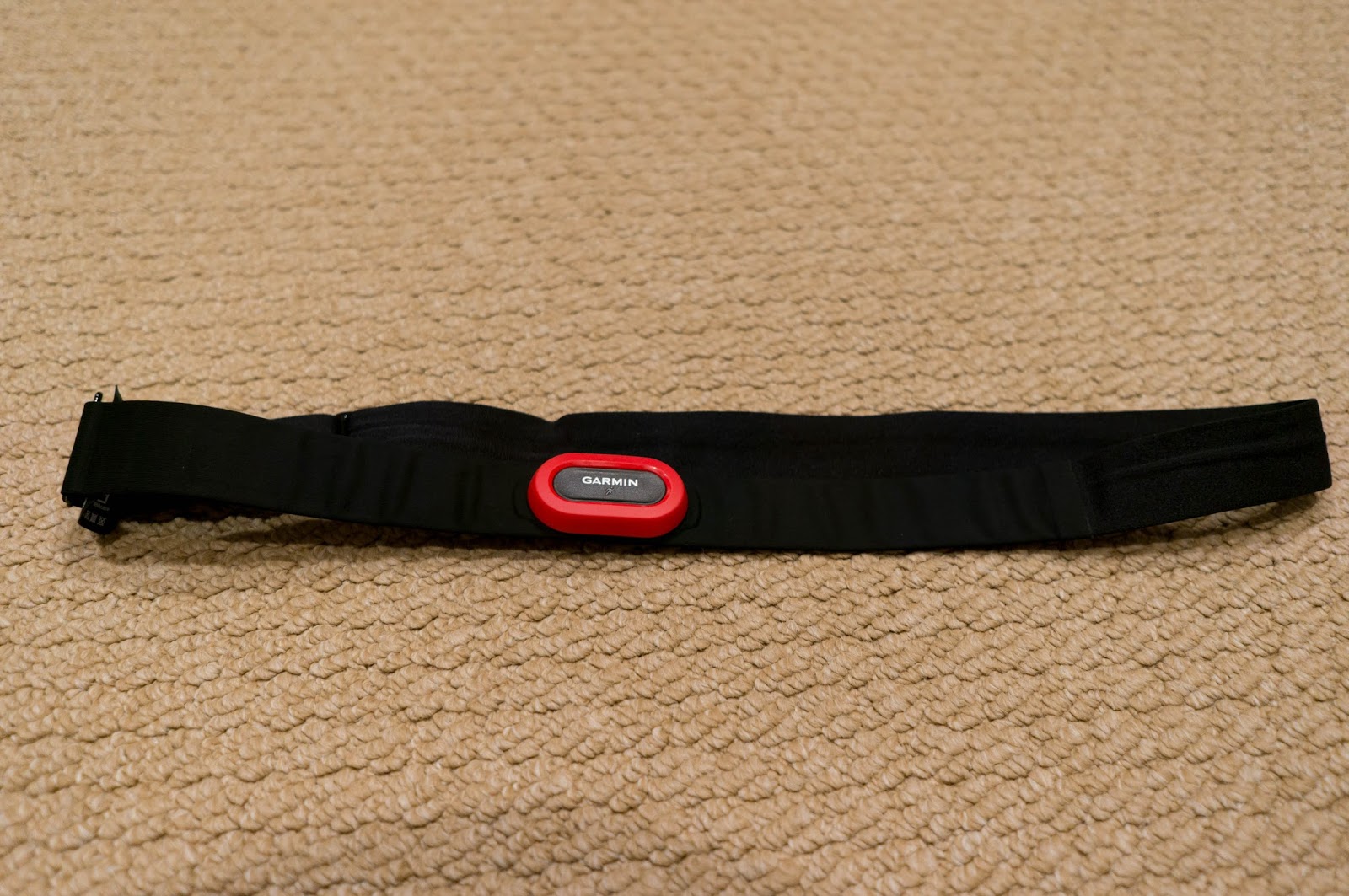
I am using a Garmin Running device to monitor my activities.


A bit expensive, but there are many nice features!


It is a reasonable price.
This device is one generation older, but it is good enough and the price is very good deal!

5/27/2019

Heart Rate Monitor ~ chest strap v.s. wrist sensor??

What heart rate monitor is good for hiking?

Chest-strap heart rate sensor

Embedded wrist heart rate sensor


There are a lot of devices which have heart rate sensors!!
Running devices, activity tracker, Apple watch and so on!
A several years ago, most of heart rate sensor for running was chest strap type.
Now, it is getting popular to use embedded heart rate sensor in a device.
I had a comparison about the accuracy!


Offset of measured heart rate between a chest-strap sensor and embedded wrist sensor

Offset of measured heart rate

I collected heart rate data based on my regular running exercise for a month.  I was wearing the both type of heart rate sensors, a chest-strap type and an embedded wrist sensor when I ran.

The chart above is the offset of the both measurements.  More than 90% of samples are within 4 (bpm).    This shows the embedded sensor is probably accurate enough for running and hiking.

Here is an example which has larger offset:

An example of larger offset 
The orange color is a data captured by a chest-strap sensor (with Garmin Forerunner 910XT).
In the middle of chart, there are some portion where the offset is bigger.  However the reading is more than 180 (bpm) which is probably way bigger for mild jog.  Therefore, I assume this data captured by a chest-strap sensor might be something wrong.

Another example is the the following:

Another bad example with larger offset

The blue color is captured by an embedded writ sensor (Garmin Vivosmart HR).  The early part, there are some spikes.  This data captured by an exercise using StarMaster in a gym.  It is hard to believe there is such spike during the exercise since the type of exercise won't introduce such narrow heart rate spikes.  Therefore, I assume this would be wrong reading by the embedded sensors.

Conclusion:The both sensors might have some wrong reading!

The both example shows there might be some wrong reading for the both sensors.  It is hard to identify the reason why the reading gets some offset.  Overall reading is matched well.   I think as long as contact between the sensor and body is good, the reading can be accurate.
My best guess is that if the contact is getting loose or dislocate a proper position to the body, the reading might be offsetting.

When people using a chest-strap sensor, it is probably easy to dislocate position due to a backpack.  I think that would be one of issue when I use the chest-strap type sensor during hiking.
Therefore, I would recommend embedded wrist sensor for hiking!


This device is with GPS function and it can track where you hike.


This device has pulse oximeter function, but no GPS.
It might be good to see your oxygen saturation which might be a good index for your body reaction of elevation!


9/05/2018

Garmin fenix 5X Plus ~ After some internet search ...


I mentioned I was interested in a new product from Garmin, which is fenix 5X Plus.  I did some search on the internet to look into review by some other people.

Here is the summary:
The pulse oximeter feature is supported in only "5X" model.  The other models are not supported.  I also found out Japanese edition does not support it at all. I am not sure why.....

The other things I found out is to look at SPO2 data on Garmin connect is not supported, either.  This product was announced some time the end of June this year.  It's been some time and it may supported now.  However, reports / reviews I checked mentioned it says the feature is not available.  I know Lactate threshold feature is not supported on the mobile application.  So I guess some special features which are supported a few specific model might not be supported.  This is probably in such category.  (Lactate threshold can be seen on the regular web site for Garmin Connect).

It also consumes a large power.  If people measure SPO2 value so often, then the total time to use the device with one charge would be shorter.  If people using this feature and GPS during hiking, the duration would be impact, especially this device also support embedded music player feature which also eats more power..... 
Based on a data I took from hiking on Mt. Whitney Trail a few weeks ago, the range SPO2 without  acclimatization is big.  Thus, it might be hard to find out a reasonable measured value if the sample size is small.  I think we probably need to sample more data to get average to evaluate the data in higher elevation without acclimatization.

Usage for Sleep apnea, it is also better to sample often to detect event of stopping breathing during sleeping.  For such purpose, it might be better to use a traditional pulse oximeter to collect data.

I concluded I would wait ./ watch how this feature would be supported.   For now, I have everything I need and I will continue to look into reviews by other people......


9/04/2018

Garmin fenix 5 Plus (5XPlus) ~ This is really cool!


Garmin fenix 5X Plus (from Garmin.com)

I just wrapped reports for hiking to Mt. Whitney this year.   I was looking into some new product on the internet.  I found another new product from Garmin, "fenix 5 Plus" series.  This is really cool.  What I own is fenix 3 HR.  When fenix 5 was introduced, I did not really want to get it since not much new features were added and it was not really attractive for me.  However, this one "fenix 5 Plus" is really attractive for me.

The big one is they added Pulse oximeter function.  This means the device can capture all data I really want during hiking.  I do not have to carry a pulse oximeter to hiking anymore.  Also, it is easy to collect SPO2 value when I walk.  It is really helpful to collect more useful data for "smart hiking" I am writing in this blog.  This is really good one for hiking in higher elevation.

The price is a bit expensive, the low end model which is "fenix 5S" the price is starting from about $800 however, the pulse oximeter function is not supported.  It seems that the function is available for the high-end model 5X, which is starting from USD $850.  The model also includes map function, although the display might be too small to use the map function.  But it might be better than nothing.

So I am considering to get it some time in the future.  It might be hard to get it any time soon, but I really want to get it!  In a mean while, I will collect more information and review in the internet.
I think it is really good one for serious hikers who is looking for a GPS tracking device.

8/30/2018

Mt. Whitney Hiking 2018 (7) ~ Garmin fenix 3 HR


Garmin fenix 3 HR

GPS Watch

I posted reports for hiking on Mt. Whitney Trail.  Today, I am writing about Garmin fenix 3 HR which is a GPS device for many spots activities.  I got it about two years ago, but this is the first time to ware it for hiking in higher elevation with the pace management.

This is not the latest model from Garmin, they introduce newer model such as fenix5.  However it is improved in many areas from the Forerunner 910XT that I had been using before this model.

Heart Rate sensor

In the previous model I own, it requires a chest-strap heart rate sensor.  Without the chest-strap sensor, it could not monitor heart rate.  However, this model has an embedded heart rate sensor inside the watch and it can monitor heart rate without the chest-strap style sensor.  It is much convenient for hiking and climbing.  It is different from running like carrying a backpack.  The sensor easy to get loose, move and etc.
Regarding the embedded sensor, I evaluated the embedded sensor during my running activities.  Basically to compare the value from the both sensor.  As my conclusion, I think the embedded sensor is reasonably close enough to the chest-strap sensor and I have no problem to use it for hiking and my running activities.
The biggest improvement is it can monitor heart rate 24/7!  It is a big thing for me!

Watch function

This depends on a model.  Particularly,  Forerunner 910XT does not have watch function in the standby mode which is not tracking activities.  It is not really a big problem since whenever I hike, it is in a tracking mode.   However once I get into a tent, it works as a regular watch.  It is just convenient.  A model I owned before Forerunner 910XT, Forerunner CX405, it has a similar watch function.  I just wonder why "910" does not have such watch function..... 

Hiking profile

My previous model is something like designed for just running (and swimming).  It was not considered to use other activities.  However, this model has more profile for other activities like hiking.  It is nice.  The previous model has a feature to change the display setup for different purpose.  But I need to change every time I use different purpose.  It is much better to have a dedicated profile for each activities.

Display of heart rate

This is probably the most useful feature in this hiking.  The legacy style which just shows a heart rate value in the previous mode when I set a target heart rate to manage the pace.  I just need to know the current heart rate value.  However this model display is improved like a photo on the top of this post.  It is color coded to show the heart rate zone as well.   Therefore it is easy to see where the current hart rate in a zone.  It is really nice when I try to maintain my heart rate in a specific heart rate zone.  I just try to adjust the pace to stay my hart rate in the middle of the zone.  I do not have to memorize the boundary of the target zone.  It is pretty good way to display the heart rate!

Overall, the latest model has very similar user interface and features.  Therefore, I believe it does not have much difference.  The capacity of the battery is also good enough.  Although I charged it in the tent just in case, it might be OK not to charge it.  Based on the specification, it can be covered this activity, the total hiking duration this time is a little less than 15 hours and it supposes to be covered.

(To be continue ....)

8/28/2018

Mt. Whitney Hiking 2018 (5) ~ All day heart rate data during hiking


All day heart rate on August 18, 2018


All day heart rate on August 19, 2018

What does heart rate trend looks like during hiking days?

The last a couple days, I reported overall walking time and heart rate for this hiking.
Today, I looked into a trend of heart late all day during hiking other than walking time.

Here is what I did for this hiking, I left home early in the morning on August 18, 2018 and came home late on August 19, including 6~7 hours driving one-way.

The first day (August 18th), I woke up around 3 am and left home at 3:40 am.  Heart rate during sleeping is around 55~65 (bpm).  During driving, it is somewhere 80 (bpm).  When I took a rest, I was moving around.  The heart rate a little jump to around 100 (bpm).

Time to arrive the visitor center in Lone Pine to pick up the permit around 9:30 am and left there before 10 am.  The elevation of trail head, Whitney Portal is somewhere around 8000 feet.  However on the way to trail head, the heart rate started up to more than 90 (bpm).   When I was preparing hiking near trail head, the heart rate reached 100 ~ 110 (bpm).

During hiking, that was what I reported last few posts.  As soon as I started walking, the heart rate hit more than 150 (bpm) as I mentioned in the previous posts.   When I took a rest with sitting, the heart rate got lower, but it was up to 120 (bpm).  It seems that the heart rate stay a little higher even I completely stopped and rest.

After setting up tents, the heart rate was stable somewhere around 110 (bpm).  However, it hit 150 (bpm) when I took water near the camp sit with a little walking.  After that I took the watch off for charging.   When I prepare meal in the tent, the heart rate was getting a little higher whenever I moved.  Overall, it was slowly getting lower, it was around 100~110 (bpm).  During sleeping, it was continue to be lower and right before waking up was somewhere around 70 (bpm).

However, whenever I started moving in the tent, the heart rate was getting higher again.  It was around 90 (bpm)

The second day, I carried minimum stuff for the summit attempt and I managed my heart rate less than 140 (bpm) as I mentioned in the previous posts.  Overall, the heart rate during hiking was 135 ~ 145 to the summit and the rest was somewhere around 120 (bpm) and the peak was a little more than 130 (bpm) during descending.

On the way back to home, the heart rate stayed higher than usual, which was around 100 (bpm).  When I came home, it was 84 (bpm).   I did not show a data during sleeping after coming back, but the heart rate was higher than usual, the starting was 80 (bpm).  However it was back to normal in the next morning which is somewhere around 50 (bpm).
My typical heart rate during sleeping is 45 ~ 55 (bpm) and heart rate during desk work is somewhere around 65 (bpm).  So it is obviously higher heart rate when I stay higher elevation during the hiking even in the tent.   Also, the data shows it took longer time to be back to normal even if the elevation is getting lower.  It is different from a regular training (running).  It is back to normal after a few hours.

Only one data, but....

This time I collected heart rate date all day during hiking.  However this is only data I have now.  It is hard to conclude anything.  However, the heart rate when I stay in higher elevation is expected.  It is just higher than usual.   On the other hand, the recovery time to back to normal was taking much longer time than what I was thinking.

It is still a speculation, however, I guess it takes much longer time when people are in lower oxygen situation.  With other data such as pace / total time, I think it is probably better to minimize the consumption of oxygen during hiking.  It is probably less impact overall.  Once people walk higher pace to consume a lot of oxygen, it might be hard to recover especially lower oxygen environment.  So that it might help to walk slowly to minimize oxygen consumption.

(To be continue)

8/21/2018

Mt. Whitney Hiking 2018 (2) ~ Data analysis for the first day

Heart Rate trend for the day 1


Walking Speed trend for day 1

Elevation trend for day 1
Data for the first day

As I always do for each hiking, I captured GPS / HR data by a GPS running watch.  Here is the analysis result for the first day of the hiking to Mt. Whitney this year.
As a result, the total time from the trail head (Whitney Portal) to Trail Camp where I camped was:

  • Total Time:    271    minutes (including resting time)
  • Resting Time   14.2 minutes

The distance based on the GPS data is 7.4 miles (11.9 km).
To compare data from different years, some reference point (location) is picked from a map with latitude and longitude.  Based on the location data, a program looks for the GPS data entries within 50m from the reference point.  Then, the program will check the minimum duration for each section.  Since GPS and distance calculation in the GPS device has some error, the measured distances are not the same for each year.  The average distance of this section (Trail head - Trail Camp) in the past years is about 6.5 mils (10.5 km) .  So that the distance measured this year is about a mile longer than the average.  However, this is not an important parameter for this comparison.  This comparison is focusing on the total duration, therefore it is not a problem.

The following is the past duration in the same section:
  • 2011: 264 (min) (Resting: 56 min)
  • 2014: 276 (min) (Resting: 65 min)
  • 2015: 266 (min) (Resting: 64 min)
  • 2016: 310 (min) (Resting: 81 min)
  • 2018: 271 (min) (Resting: 14 min)
(*) Note: The definition of resting time is the walking speed is less than 20 m / min.

Based on this data, this year is 3rd fastest after 2011 and 2015.  The big difference is much less resting time this year.


Actual feeling?

Here is what I felt during hiking this year.  Overall, my condition was pretty good.  I had 4 hours sleep at home before left home.  Just thinking about long driving during night, this would be a better than other years and it was not too bad at all!

However.......

When I started walking from the trail head, the heart rate jumped to more than 160 bpm right away even if the walking pace was not so fast.  I guess this is probably due to lack of training for ascending before the hiking.  I think my muscle strength was not enough and it was easy to increase the heart rate.  Therefore, I was very carefully manage the heart rate with slower pace from the beginning of this hiking.  The target range I set was somewhere around 140 ~ 155 bpm. 

Duration for each key section

Let's look into more detail!  A section from Whitney Portal to a branch to Lone Pine Lake, I took about 103 minutes.  I thought I was walking very slowly.  However it is very similar time as year 2014, 102 minutes  which was the fastest duration in the past.  The difference between the years are resting time, it was 12 minutes in 2014, but only 6 minutes this year.  It is the half of 2014.

The next section is from Lone Pine Lake branch to Outpost Camp.  It is relatively flat section and the fastest duration in the past was 28 minutes in 2011 which includes 3 minutes resting time.  This year was 30 minutes without any resting time.

The next section is probably the most tough section in the first day which is from Outpost Camp to Trail Camp.  The best duration in the past was 125 minutes in 2015 with 37 minutes resting time.  This year was 132 minutes with 9 minutes resting time.

Please note, the sum of duration for each section does not match the total time I showed in the beginning.  This is because, each reference location is defined within 50 m range and calculated the duration with the shortest duration between each reference point.  This means the moving time with in the 50 m range for each section does not include the time.  Thus, this is not an error.

Distribution of heart rate zones

The heart rate zone distribution for the first day, almost 80% of time, it was less than Zone 2.  Except 2012, that I hiked a friend who did not have a lot of experience in high elevation, therefore the overall pace was significantly slowing down.  The rest of years, Zone 3 distribution was more than Zone 2.  That is the major difference for this hiking.   This is a similar experience from Trail Camp to Summit in the other years that I kept my heart late below Zone 2 and I did not have to take resting time a lot.  I think if I keep my heart late below Zone 2, I could move without much resting for long time.

Overall, the total duration was not taking long time I originally thought during the hiking even if the walking pace was relatively slower than the other years since the resting time was significantly shorter than the other years.  Also, I felt it was one of easy hiking comparing the other years.


Summary of the first day

I think I am pretty sure that walking pace management based on the heart rate is really efficient method to manage the pace during hiking especially in higher elevation.
This year, the heart rate was much higher than usual and I intentionally kept slow pace and it helps overall duration in day 1.

(To be continue)

8/14/2018

Mt Whitney Hiking ~ Plant to be there this weekend!

From the main ridge of Mt. Whitney

I have not updated this blog for a while, I could not spend a lot of time for outdoor activities this summer due to many thing I need to do.  However, I find some time to hike Mt.Whitney this summer.  As I originally planed, this weekend would be the time!
Now I am preparing the hiking!!

Confirmed the reservation

First of all, I have just confirmed the reservation on the reservation site.  People need to confirm the reservation 2 to 14 days before the reservation, otherwise the reservation will be canceled.  It is very important to keep the reservation.   It was last minutes this year, but I have done!

まずは、予約サイトで予約の確認を行いました。予約の日の2日から14日前の期間に確認をしないと予約がキャンセルされてしまいますので、重要です。今回はギリギリになってしまいましたが、予約を確認しました。

Stuff to carry

This time, it is mid August and I do not have to worry about snow.  I do not need anything special this time.  Therefore, the plan is to minimize what I carry and do easy hiking!  I plan to wear hiking shoes instead of heavy boots this time.  I do not have to buy anything new except a gas canister and foods.   Only thing I need to do is to check all equipment.

  • Tent / Pads
  • Sleeping bag
  • Water treatment
  • Water bottle
  • Jackets
  • Cooking ware
  • Stove
  • Bear canister (*) must be required!!
  • Cap
  • Sun screen
  • Trekking poles
  • lighter
  • foods
Other than that, I will also ware the running watch with GPS / Pulse oximeter to monitor my heart rate and SPO2 during the hiking.   Also, I will carry amateur radio to check APRS coverage in the area.


I will report more detail after I coming back!

(*) FYI:  I also have another overnight reservation on August 31, 2018.  I do not need this any more and plan to cancel some time this week.   I am not sure when it comes back to the reservation site.  However it might be worth to watch the site if people are interested in to get it.

6/30/2018

Help to minimize resting!

99-Switch back on Mt. Whitney Trail

Better to avoid resting in some sections

During hiking, there might be some sections where we'd better to avoid resting.  It might be hard to find out a good safe place to take some rest during hiking.   One of example is 99-switch back on Mt. Whitney Trail.  This section is steep and it might be hard to find out wide enough safe place.  In this case, one of options is to avoid resting such section.

I think to manage the pace with heart rate helps to minimize resting time.

Total Time from Trail Camp ~ the summit

This is chart shows walking time and resting time in a section from Trail Camp to the summit.  This section includes 99-switch back I mentioned above.
In 2011, I walked as fast as I can and I really exhausted.  In 2012, I walked very slowly to wait a friend who did not have much experience of hiking.  So it took the longest from Trail Camp to the summit.  In 2014, I also walked slowly since a friends got some symptoms of a mild high altitude sickness.  In 2015 and 2016, I intentionally walked very slowly to minimize the resting.  However the total time is probably similar or smaller than 2011.  Even I walked slowly, the total time could be the same or shorter.  That is one of interesting data from my hiking.

In 2012 and 2014, since the pace was very slow for me, I did not feel it was hard at all.  However, in 2011, I was really exhausted.   Unfortunately, I do not have heart rate data in 2011.  But I have heart rate data for other years.

Distribution of Heart rate zone
(From Trail Camp to Trail Crest) 

This data is a distribution of heart rate zone from Trail Camp to Trail Crest where is the most steep portion between Trail Camp and the summit.  As you can see, in 2012, I walked in zone 1 for the most of time.  In 2014, zone 1 is more time than zone 2.  In 2016, my condition was not very good and I walked in zone 2 for the most of time.  Even though, I took more time than 2015.  But the time difference is very small (about 10 minutes).   Also, I did not feel it was hard.
So as long as I can maintain the heart rate zone less than zone 2 (or zone 1).  I did not feel it was hard.  So the key is keep the heart rate less than zone 2, then I might not need resting much.

The actual walking pace was very slow.  I felt I could walk much faster, but I watched my heart rate and I kept the pace based on the heart rate.  I guess I might walk much faster if I had not monitored the heart rate.  So it is probably beneficial to monitor and manage the pace.  Just using "feeling", it might be hard to keep a good pace for hiking.

This is another good example to use heart rate to manage the pace.


6/16/2018

Smart Hiking (9) ~ Target heart rate


What is the target HR?

Based on the past data from my hiking, it is possible to manage walking pace by heart rate.  However, the question is what heart rate would be a good target to manage the pace.   That was a big question when I apply this method to hiking.

It is slightly different from running.  Because many runner has a goal or target time for a specific distance.  So many people probably look for a pace to maximize the performance.  However, hiking is not competition and it does not have to be maximize someone's performance.  Probably 30 minutes difference might not be a big deal.  So I stared "try & error" approach.

Try & Error!

I started to pick an average HR during a running activities.   I think I mentioned this before.  A typical average during running activities, my average HR is somewhere around 160 bpm.  So I picked 160 bpm as a threshold to slow down the working pace.  Since I can continue to run with this HR up to 3 hours.  Therefore, I think I can walk to manage HR below 160 bpm.  The answer was, yes, I could do it.  But it was really tough.  It was probably possible to continue, but it was not easy.  I did not have much room to enjoy the hiking.

Then, the next year, I set the target as 155 bpm.  It was a little bit lower than I can maintain.  It was much easier than the previous year and I had some time to enjoy the hiking.  But it was getting harder in the end of a day.  So I found out it might be better to set a little more lower.  Then, I picked 150 bpm the next hiking.  It seems to be an optimized pace for hiking.  It was not really hard and not too easy.  Also, the total time which included the resting time was very similar as using 160bpm or 155bpm.   Slower pace helped to reduce the resting time and the total time to the same destination is almost the same.

This was how I found out my target heart rate for hiking.  It works well for me.  However, this number could change especially my age (around 50 years old).  The fitness level is probably getting worse year by year.  So I was looking for a better method.

(To be continue)


6/13/2018

Smart Hiking (8) ~ Strength of activity for hiking

Example of heart rate trend
(Whitney Portal ~ Trail Camp in 2015) 

Impact of elevation

The above chart is an example of heart rate trend in higher elevation.   As you can see, the heart rate except resting above 9,000 feet (3,000 m) is more than 150 bpm.  This is a sort of high side.  Here is another data as a reference.

 Heart Rate during long run

This is a data when I ran for 3 hours.  The pace is not very fast, but the average heart rate is somewhere around 150 bpm.  To compare those two activity is not really easy.  During hiking, I had a backpack with all camping gears, however, the walking pace was really slow.  The strength is probably higher than the long run.   The heart rate is close to 160 bpm in some part.

What I try to say here is the impact of elevation, or lower oxygen environment, is probably much higher than people think.  The key is we need to understand this impact of elevation and manage the heart rate (pace) is really helping for better experience during hiking.

Also, the running example shows that I can run longer if I can maintain the heart rate somewhere around 150 bpm.

(To be continue)

6/12/2018

Smart Hiking (7) ~ Pace and resting time

Total time from Trail Camp to the summit of Mt. Whitney

This is another interesting data from my experience.  This is break down for walking time (moving time) and resting time (time not to move).  Again, in 2012, I hiked there with a friend who did not have much hiking experience and I need to stop and wait the friend often.  Therefore the total time is taking more time.  In terms of walking pace, in 2011, it was fastest.  In 2014, it is probably moderate.  In 2015 and 2016 were slower than the other years.

Especially in 2015 and 2016, I tried to maintain the heart rate less than 145 bpm.  Then, I did not have to take a rest or stop so often.  Then the total time to the summit is much less than the other years.

This section is above 3,700m.  The summit is close to 4,500m.  Therefore even if just a little faster pace is a cause of increasing the heart rate.  To lower the heart rate, I needed to stop or slow down the pace.  If I can maintain the heart rate lower than 145 bpm.  I did not have to do that.

In 2011, I felt really exhausted.  However, in 2012, since the pace is so slow and I felt it was really easy.   I had a similar feeling in 2015 and 2016.  Probably around 140~145bpm is probably my optimized pace.   The pace in 2015 and 2016, I thought it was really slow.  But it was a right pace in the elevation.  However it might be a little difficult to maintain such slow pace without knowing the heart rate.  I probably tend to walk faster if I do not have such indication.

This is one of good example of pace management with heart rate in higher elevation.

(To be continue)

6/10/2018

Smart Hiking (6) ~ Total Time with different pace

Total time from Whitney Porta (Trailhead) to Trail Camp

I went hiking to Mt. Whitney a several times in the past years.  I hiked some different pace on Mt. Whitney Trail.  Trail Camp is one of major camp sites on the trail.  From the trail head, the distance to Trail Camp is about 6+ miles.   The total duration in this section is 264 ~ 346 minutes.  Actual walking time which excludes the resting time is from 202~243 minutes.

In 2012, I went there with a friend who did not have much experience for hiking.  Therefore the overall pace is very slow and we took longer resting.  The other years, the actual walking time is probably very similar 202 ~ 229 minutes.   However, the feeling was very different.  In 2011, it was obviously over pace and I felt very exhausted.  However, the rest of years, I did not feel exhausted at all.  I felt something much easier than 2011.  Primary difference between 2011 and the other years was walking pace.

In 2011, I tried to maintain the original pace as well as I can.  However, I could not keep the same pace due to high altitude sickness and I was slowing down significantly and it was very very slow near Trail Camp and I was really exhausted.   However in 2015, the total time was almost the same as 2011, but this year I did not feel exhausted at all.  After 2014, I tried to set a target heart rate and tried to maintain my heart rate below the target.   In 2014, the target was somewhere around 160 bpm, in 2015 somewhere around 155 and in 2016 somewhere around 150.

This is very interesting data I found from my records.   Yes, it is much easy to slow down the pace.  However, it does not seem that there is not much difference for the total time and the feeling is very different.   So, I realized there is a way to "optimize" the pace.

(To be continue)

6/08/2018

Smart Hiking (5) ~ Heart rate base training

Running Watch (device) with GPS and Heart Rate Monitor

I wrote about relationship between elevation and heart rate in the previous post.   Today, I am talking about heart rate base training in running world.  This is slightly different topic from hiking, but it is better to know the concept of heart rate training.

Running device

Many runners use a running device which has GPS, heart rate monitor and other nice function nowadays.  It is really convenient to track all activities with a lot of data during the activities such as where they ran, distance of running, pace, heart rate and etc.  It also help to tell actual pace when they run in real time.

Since such device is getting very popular in running world, many people using the device to manage running pace and training.  There are so many training menu using heart rate since depending on what performance people try to improve, the intensity of the training is different.   For example to burn fat in the body, the intensity should not be high.  Low intensity with longer time of running would be much more efficient to burn body fat.  However to improve speed and lactate threshold, it usually require high intensity like interval training.  To set a target, "pace" was used in old days, something like 6 minutes per mile x 5.  However, it is hard to set a right pace for many people who is not really serious athletes.  Then the strength / intensity might be too high and it is due to an injury.  Or it is too easy to improve the performance old days.
Now many training many using "target heart rate" instead of "target pace".   It is much easier for many people to set a reasonable goal based on heart rate.

Heart rate zone
To set a target heart rate, there is a definition called "heart rate zone" which is a range of heart rates based on the maximum heart rate, sometime maximum heart rate with the resting (minimum) heart rate.  As long as people knows the maximum (and resting ) heart rate, it is easy to tell which heart rate range people need to maintain for each training.

One of simple example is based on ratio of the maximum heart rate:
- Zone 5 - 90% of the maximum heart rate ~ maximum heart rate
- Zone 4 - 80% ~ 70%
- Zone 3 - 70% ~ 60%
- Zone 2 - 60% ~ 50%
- Zone 1 - 50% ~ or less

Then to burn the body fat, zone 2 would be a good zone.  Typical marathon pace for many people is probably zone 3 or zone 2.   Many interval training can be zone 4 something like that.

The maximum heart rate can be find in a real high intensity activities or using an equation to estimate the maximum heart rate by age.  (A popular formula is "220 - age" [bpm])

Based on such heart rate zone definition, it is hard to maintain zone 4 for a long time.   Even zone 3, it is probably possible to maintain the range longer than zone 4.  But it is probably not easy to maintain zone 3 very long time.  To continue to maintain for very long time, it is probably better to stay in zone 2.   That is the idea.

Based on my experience, it is similar in hiking.  If the heart rate reaches zone 4, it is obviously impossible to maintain such high heart rate for long time.  Therefore, if we can maintain a pace in hiking based on this heart rate zone.  I think we can find a better pace for hiking.

This is the concept for "smart hiking" in higher elevation with heart rate.

(To be continue)


6/07/2018

Smart Hiking (4) ~ Example Heart Rate data on Mt. Whitney Trail

Heart Rate trend in 2015
(Whitney Portal ~ Trail Camp)

Here is one of examples for heart rate and elevation.
The chart above shows heart rate trend from Trail Head (Whitney Portal) to Trail Camp.  Since I took some rests on the way to Trail Camp, there are some drips.  However the overall trend is increasing the heart rate significantly.

Walking Speed trend in 2015
(Whitney Portal ~ Trail Camp)

This is a trend for walking speed.  Since resting, there are drops as well.  However, the overall trend is decreasing the speed.

Slope (Elevation / Distance)

Slope of the trail is close to linear.  It is probably okay to assume the slope is almost constant in the section.  The weight in the backpack is also almost the same from trail head to Trail Camp.
Those three chart shows that the heart rate is increasing even if the walking pace is slowing down.  The rest of factor might impact, which are slope of trail and weight of the backpack would be very similar.   The only factor would be elevation.

Elevation of trail head is around 2,500m and Trail Camp is about 3,657m.   The biggest depth on the heart rate and the speed is Outpost Camp where is about 3,170m.  Roughly, below Outpost Camp, the peaks are reached a similar speed.  However after Outpost Camp, the peak speed is clearly much slower than the lower parts.  Also, I did not feel any clear symptom I can recognize below Outpost Camp.  Based on the data above, here is what I found:

  • Blew Outpost Camp, I did not feel any clear symptoms for high altitude sickness
  • Blew Outpost Camp, I was able to maintain a similar speed as I hike lower elevation.
  • Blew Outpost Camp, heart rate is getting higher even if the speed is a similar.
  • Above Outpost Camp, I cannot maintain the same speed as lower portion
  • Above Outpost Camp, the speed is getting lower
This experience shows even I was not aware of any impact of high altitude sickness, the heart rate stats getting higher somewhere near 3,000 m (or 9,000 feet).  Also, above 3,000m (or 9,000 feet), the heart rate gets higher even if the speed is dropped.  Clearly, heart rate could be a good factor to see an impact of elevation.

Heart rate in running

When I am running, the heart rate I can run for longer distance / time would be below somewhere around 150~160 [bpm].  If the heart rate beyond the point, it is hard to continue or maintain the pace for longer.   That is typical maximum marathon pace I am usually targeting.   The chart clearly shows, the heart rate after Outpost Camp (or 3,000m / 9,000 feet) is higher than this.  Therefore it is considered as "over pace" in running world.

Apply to hiking for pace management

From the running experience, I think we can apply a similar concept to hiking.  That is where the idea is coming from.

(Continue)


6/06/2018

Smart Hiking (3) ~ How to recognize "sign"

Difference between casual hiking in high elevation and Himalaya expedition?

One thing I can tell is that there is some difference between a casual hiking in high elevation, which is somewhere around 9,000 ~ 15,000 feet and mountains in Himalaya.
A major factor is "duration".   In general, those expeditions can be long enough to acclimatize the altitude up to some elevation.   However most of casual hiking could be done within a few days.   I think it is probably not long enough to acclimatize the elevation.   This means some symptoms for high altitude sickness is probably given and I think the key is probably to minimize the impact of the elevation.  That is a big difference.

On the other hand, most of strategy people believe is a similar way as those expeditions.  Something like staying higher altitude in a previous night....   However, I personally do not believe it helps a lot.  Based on my experience, I did not really realized that I was getting some symptoms until I really have obvious symptoms.  I think that is difficulty of such hiking.

Need some clear factor to quantify the impact to human body

Especially in early stage or the elevation is probably not high enough to see very clear symptom of high altitude sickness, most of people think "I am good".  Then people tend to walk a regular pace as lower elevation based on their experience.   People who has a lot of experience in that elevation, they might have a better idea how they can manage the pace with the elevation.  In this case, it is probably less problem.  The problem is many people do not have a lot of experience above 10,000 feet.   Therefore, they might walk over pace and exhausted.

If people can have a good factor to recognize the impact, it might help to adjust the pace.

One of popular factor for high altitude hiking / climbing is probably SPO2 (Peripheral Oxygen Saturation).   The value can be measured by pulse oximeter and many expedition might use it as a reference for altitude acclimatization.   If people measure SPO2 in lower elevation like lower than 1000 feet, then the value is typically more than 95%.  However if people is getting higher elevation, this value is getting lower.  Based on my experience, SPO2 valur in 14,000 feet was sometimes less than 80% which is really low value.   It is probably a good factor to show some impact to human body in higher elevation.  This value could be lower once people acclimatize the elevation and it is a good factor for acclimatization.   It is probably very useful for the expeditions.  But it is probably a little hard to use for hiking in a short period.

Another one is probably heart rate.  I am also runner and using a running device (watch) with GPS to track all race and training data.  Many devices nowadays can capture heart rate during the activities.  I also collect heart rate data during hiking to Mt. Whitney which is more than 14,000 feet.  I realize that the heart rate is getting higher if I am in higher altitude even waling pace is slower.
Also, heart rate is one of very good factor to manage the strength of a training and manage running pace in running world.   Therefore, I believe a similar idea can be applied to hiking.   That is the idea to manage walking pace in higher altitude during hiking.

I will show some examples which indicates some impact of higher elevation.

(To be continue)


6/05/2018

Smart hiking (2) ~ Hiking over 9,000 feet


Hiking over 9,000 feet

When people hike over 9,000 feet, they might start feel some symptoms for high altitude sickness.  There are some popular destinations over 9,000 feet, such as Mt. Fuji in Japan, Mt. Whitney in California / USA, Mont-Blanc and etc.   Depending on seasons, but it is probably not so difficult in summer time and many hikers are there.  The symptom is typically not really serious in many cases for those destinations, I guess it is something wrong / different for many people and they might be able to reach the summit and come back without major problems.

However, many people feel this is different from hiking in lower elevation.  Therefore there might be some tips such as stay higher elevation in the previous night, walking slowly and etc.  They might be coming from strategy from expedition to mountains in Himalaya.   Basic idea is taking more time to acclimatize the elevation.

My experience on Mt. Whitney trail

I had a several experiences to hike to Mt. Whitney in past years.  I also tried to stay higher elevation in a previous night like many articles suggested.   However, I did not feel any clear difference.  On the other hand, I had very different feeling in a few different hiking.  I felt really exhausted once, but I felt really easy in other.  The major difference is probably walking pace.   It seems to be common sense if people walk slowly, it must be easy.   However, after I collect heart rate data during hiking, I think there is a better way to manage the walking pace.  Obviously, it might be impossible to avoid any symptoms for high altitude sickness, but I believe there might be a way to optimize the pace to minimize the impact of high altitude sickness.

This is the topic I will post as a series to this blog.  I wrote a book about this experience in Japanese and I plan to publish English edition after this series.  After publish the Japanese Edition, I got some extra data / thought, therefore I will reorganize the contents and post in this blog.

(To be continue)

5/05/2018

Garmin Forerunner 645

Forerunner 645

Forerunner645 is available!

I have not checked Garmin web site for a while and I found out Forerunner 645 is available. The price is USD $399.99.  The feature is probably between Forerunner 935 and 735.  Battery life is shorter than Forerunner 935.  Forerunner 645 is up to 7 days as a smart watch,  14 hours with GPS.

Overall, it is probably good enough for regular running and hiking purpose.   Major difference between 935 and 645 is "Training Stauts" and "Training Load" features that fenix 5 also has.

I have fenix 3 HR which does not have those features, but I do not believe they are really important features.  It is probably "nice to have" features.

Based on the price, price for Forerunner 735 is reduce to USD $349.99.  So 735 is attractive for price point of view. 

The other feature I found is this has "Garmin Pay".  It seems that it is a similar feature like "Apple Pay".  Garmin watch really becomes "smart watch" now.  For most of people, Apple watch might have more "nice feature", however for runners / hikers, I guess Garmin watch is probably better due to longer battery life.

For now, fenix 3 HR is probably good enough for me and I do not plan to replace any new product.  However, people who look for a GPS watch, it is probably worth to look around the new products.

12/10/2017

Pace management with heart rate (4) ~ Heart rate during hiking

   The previous post was talking about required endurance for hiking.   Without enough endurance, it might be hard to achieve some hard hiking just managing the pace.   Today, I assume a person has enough endurance for a hiking, then how he / she can manage the pace for hiking.

   First of all, a target heart rate which is the upper limit of heart rate during hiking needs to be set.  As the previous posts are talking about heart rate zones to define a target heart rate zone.   Of course, the idea is to maintain the heart rate below the target, however there are some tips.  It is probably better to set an actual target 5 ~ 10 bpm lower than the upper limit since it is typically increasing the heart rate slowly even if a person walking with a similar pace.  In many cases, the intensity of hiking is typically high and it is probably hard to maintain a similar heart rate even if he / she walk a similar case.  Also, the trail slope can be vary and it is hard to maintain the heart rate in some steep sections.  It is probably better to have some extra margin not to reach the upper limit based on my past experience.
   It is also better to slow down significantly or stop if the heart rate reaches close to the upper limit or beyond the limit.  Once it is not immediately lower the heart rate with slowing down / stopped, then it is a time to take a rest with completely stop walking.  You may need to take a rest till the heart rate is get lower than "zone 1".  If it is not getting into "zone 1" in a short period of resting, it is probably better to lower the elevation if you hike higher elevation more than 12,000 feet in general.  If you want to walk without taking reset for a long time, you might need to set the actual threshold to adjust the heart rate much lower.  If your target zone is "zone 2", you might need to close to be lower threshold of zone 2 or zone 1.
   Another tip is to try keeping a constant heart rate as well as you can for easy hiking.   If your heart rate range during hiking is big, it is typically really high intensity when the heart rate in upper side.  In this case, you might feel hard in many cases.

(This is a summary for pace management with heart rate)

For detail, I will be almost ready to publish a Kindle Book about this topic very soon.  It is under review now.   I try to complete this this months and I will be announce it when it is ready.

12/07/2017

Pace management with heart rate for hiking (3) ~ Are you ready for hiking?

Fitness Level
   I was talking about heart rate zone definition in the last post.   I think it is probably good to use “zone 2” as a target heart rate for hiking if you are doing training regular basis.   It is probably possible to maintain the heart rate within the range during hiking.   For my case, I may be able to push myself to use “zone 3”.   Based on my experience, a good target zone for hiking would be zone 2 or 3.
   Now, let’s think about people who do not do training regular basis.  I think some people still can be a good fitness situation even if they are not doing training.  I think this type of people are a similar as people who is doing training.  The other group would be people who are not good fitness condition.  I got some feedback that the idea to use heart rate to manage hiking pace.  It seems that the scheme does not work very well for some people.   I think the idea could still help, however, the essential problem is that they are not really ready especially a long hiking.
   Even myself, if I stopped training for a while, it was hard to run even if it was really slow pace.  The heart rate is easy to jump up and hard to continue running.   However, a few weeks after I resumed running, it was getting much better and I was able to maintain heart rate even if it was a little higher pace.
   Therefore, I would say if people who are not ready for a hiking, they need to improve their fitness situation first for a better hiking experience.

Test / Adjust the target heart rate
   So I would suggest people to do “test” once they sets the target heart rate.  Let’s say using one of method to define your heart rate zone.   Let’s pick “zone 2” if you are the first time to use heart rate based pace management.   Then let’s try to do some exercise to check if the heart rate zone is reasonable for you.  Please keep in your mind that “exercise” may have some risk to get injury or the worst case it could be a cause of a critical conditions in your life, especially people who do not do training regular basis, older people and etc.   It is probably better to check with doctor / trainer what type of “exercise” you may start based on your situation.

   Assuming you are ok to do some “exercise”.   You may start with “walking”.   You may try brick pace walking around 30 minutes and check your heart rate.  If it is flat load and the heart rate is over or close to the upper limit of zone 2.  You might need to improve your fitness level.  If you can maintain the heart rate within the range for more than an hour, you might want to do slow jog to see if you can maintain the heart rate within the range more than an hour.   You may use this is an initial target heart rate for hiking.  If it is too easy for you, then you can set a bit higher.  You may want to walk hilly trail to get a similar situation as hiking for further adjustment.