Showing posts with label Mountains in Japan. Show all posts

4/25/2014

Introducing mountains in Japan (7) Mt. Aizu-Koma (Aizukomagatake)

At the top of Mt. Aizu-Koma

Mt. Aizu-Koma (Koma-ga-take)

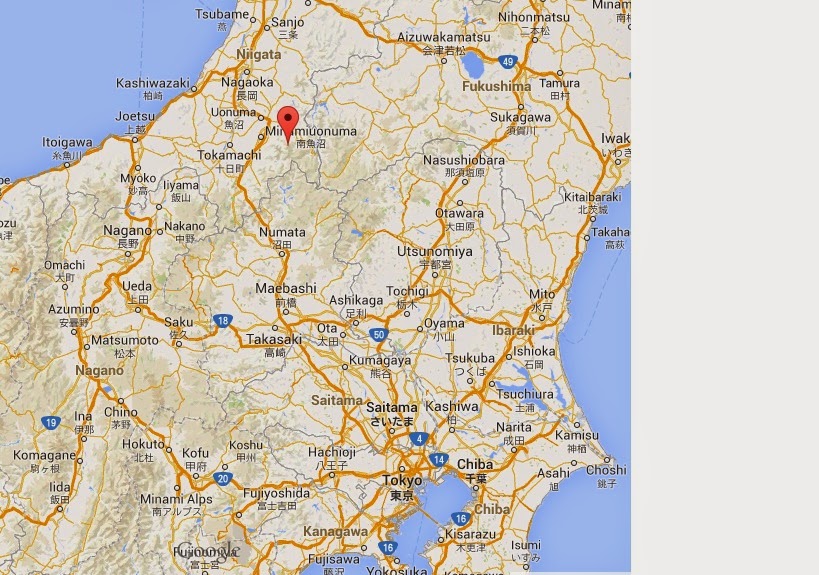
Mt. Aizu-Koma is in "Fukushima-ken".   Now "FUKUSHIMA" is very famous for the nuclear power plant accident in 2011.    The plan is located on the Pacific Ocean side and the mount is located on the mountain side.


The area is about 250km from Tokyo.   It is hard to access using train and most of people drive a car to get there.  The most popular trail head for this mountain is called "Hinoemata" where is also another trail head to Mt. Hiuchi (Hiuchi-ga-take) in Oze (Previous post for this area) from the north side.  This is also a good trail.

The region is also an area getting a lot of snow in winter in Japan.  Since I really like back-country skiing and I only visited there for skiing.   However, hiking in the other seasons is also very nice to see many wild flowers along the trail as well as very beautiful changing color in autumn.

Hinoemata

Hinoemata is a very small village in FUKUSHIMA.  It is famous for Japanese noodle "SOBA".  Also, there are some public hot springs in this area.   There is a big pool using hot spring as well.   The area used to be very quiet and not many people were visiting there.   However, after some development, the area is getting famous and more people are visiting there.

It is very nice we can take hot springs after hiking and we can eat nice Japanese noodle "SOBA".

Season to visit

 In winter time, it might be hard to be there due to so much snow over there.  As I mentioned that people usually need to drive a car to get there, therefore, it is not easy to drive a car in winter time.  I guess the best season is spring to autumn.   In early spring, there is still much snow to enjoy back country skiing.  Without ski, I guess it might be hard to climbing up there.

Late in spring to autumn, different wild flowers along the trails and driving there is much easier than winter.  People can enjoy many things in this area.

It is not easy to get a rent car for foreign people to drive there.   However, it is worth to visit if you really like quiet and beautiful nature over there.  You may take a train and take a taxi to be there.  It would be a long drive from a train station.  In this case, people may take Tohoku-Shinkansen to Nasu Shiobara station, then taking a taxi to Hinoemata.  It will take a several hours from Tokyo.


4/12/2014

Introducing mountains in Japan (6) - Mt.Echigo-Koma (Echigo-Komagatake)


Mt. Echigo-Koma (Echigo-Komagatake) in March

Mt. Echigo-Koma (Echigo-Komagatake)

Mt. Echigo-Koma is located in Nigata-ken about 2~3 hours from Tokyo by super-express-train (Shinkansen).   It is about 230km from Tokyo.  Urasa Station is the closest station the express train stops.  However, the public transportation is not very convenient in this region.  You may need to take a taxi to get there.


As you probably know, I like back country skiing, therefore the top picture was taken in early spring in March.  This mountain is really nice back country skiing area.    It is quiet and not many people go there for skiing due to very long approach in early season in March.   Due to so much snow in this area in winter, the major road is closed during winter, so that it is not easy to approach this mountain in winter.  Depending on the progress of snow removal, a major road called "Okutadami Silver line" may open some time in March ~ April.  Then, people can access to Ginzan daira by car.  Starting from this time of a year, some people start visiting for skiing.

Approach in early spring, March~April

In early spring, the approach is still long, but it is much better than winter time.  People may reach to the top by ski from Ginzandaira around 4~6 hours depending on the snow condition.   The going down is easy and fast by ski.   Around Michiyuki-yama is tree line.  Above the mountain, the sloop is really wide open and it is very good for skiing.

For me, early spring is the best season to visit this mountain.   However, this mountain is good to try in summer and fall.   Then, people can approach from north side of Ograyama (Mt. Ogra).  There is a hot spring on the north side named "Komano-yu".   A lodge would open in late spring and many people approach to this mountain in late spring to fall.

There is a lodge near the top of the mountain and people can stay over night in the lodge.  In busy season, a person is in the lodge to maintain the lodge.  People can stay there, but people need to bring own food and cook by themselves.  It helps people to spend more time on their way with many wild flowers and nice view.  The trail is a long and  a day trip could be hard for many hikers, so that the load near the summit is helping a lot!

Echigo 3 zan (Major 3 mountains in this area)

In this area, Japanese people called "3 major mountains in Echigo, Echigo is an old region name for this area", which are Echigo-Koma-Nakano-dake and Hakai-san.  Walking though those 3 mountains are nice.  However a ridge between Nakano-dake and Hakai-san is really narrow.  So that if people wants to walk through this mountain, going to Mt. Tango could be easy choice.   There is another lodge near the peak of Mt. Tango.  This course is also long, but it could be easier than going to Hakai san.

After hiking!

There are some hot-springs in this area.  People can enjoy hot-spring (Onsen in Japanese) before / after hiking.  This is one of really good things to visit this area.  Also, you can find many nice Japanese Sake in this area.  This area is really famous to making very good Japanes Sake in this area in Japan.  One brand name after one of major mountain in this area, Hakkai-san (八海山) is very famous in Japan.  You may find it in a local liquor shop!

Local food in this area could be a fish from river / lake like rainbow trout, wild vegetable dishes from the local mountain.   In fall,  I guess some mushroom dish could be a good one to try.

The area is a bit far from Tokyo, but you can see old Japanese culture over there.  If you need more information, I can help to find them out!!  Please let me know!  


3/28/2014

Introducing mountains in Japan (5) Chokai-san (Mt. Chokai)

Good for back-country skiing

Chokai-san (Mt. Chokai)
Location of Chokai-san

Chokai-san is located northern part of Japan, facing Japan sea.  In summer time, it is about 6~9 hours driving from Tokyo.  It is about 500+km from Tokyo.  So that it is not close to visit this mountain from Tokyo.   However, I like this mountain very much.   The primary reason is back-country skiing.  Due to so much snow during winter, this mountain is good for back-country skiing till late spring / early summer.  In May, there is typically a lot of snow and there are many back-country ski routes.


One of good course is from Chokai Blue line, where is west side of the mountain.  There is a lodge around highest elevation point of the road and people can park their car in a small parking lot.  Then climb up to the top.   It may take a several hours from the parking.   The top picture was taken on the way  to the top.  This is long and nice view to Japan Sea.

The other nice course is from the north side.   Harai-gawa is the trail head and there is a small lodge at the trail head as well.   There are a few parking lot near the lodge and people can reach to the top around a several hours as well.  But I guess from the north side, it could be a bit short than the west side approach.   Around the parking lot, it could be a good place to spend over night with camping.  However, the elevation is high and it could be cold during night.

The other option for the over night in this area could be the entrance of Chokai blue line.  This place is not high elevation and close to ocean.   It is possible to put a tent next the car in a parking lot.  The parking lot has a public restrooms.  In high season of back-country skiing, it is around April ~ June, there might be some people who are camping on the parking lot.

Hot springs

There are many hot-springs in this area.   After skiing, people can stop by one of hot-springs to enjoy nice Japanese culture over there.   There is a big one people can stop by near Yusa, where is close to Chokai blue line entrance and another one in Yajima, where is close to Hari-gawa side trail head.

To get some food, there is glossary store in Sakata-shi.   Along Route-8, you can find many shop and restaurants.

Summer time

I have not been there in summer time.  However, I can tell this mountain is also good for summer hiking as well.   There are many kinds of wild flowers in this area.   Also, people can try the same trail in summer time as well.  Since the mountain is very close to ocean, the view is very nice.


This mountain is really far from Tokyo area and it is not easy to access for foreign people.   However, the mountain is great and nice hot springs.   If you have a chance and enough time to spend over there, this could be one of great mountain to try in Japan!


3/19/2014

Introducing mountains in Japan (4) ~ Tone-gawa (Tone River)

The river starts here
(Ohminakami-yama)
Unique climbing style in Japan

There is an unique climbing style, called "Sawa nobori", in Japan.   "Sawa nobori" (Japanese) is a style to climb through water stream.   This is one of popular way to climb a mountain in summer time in Japan.   (In a winter time, it could be an ice climbing.)

It is a sort of variation route climbing.  Since mountains in Japan are not really high elevation, most of mountain in Japan are less than 2000m that is typically lower than tree line.  This means there are many trees, plants in a mountain.   It is hard to have trails in the mountains, it is hard to make it and maintain it.   One of easy way is climbing through water stream, since there is less trees and plants near water stream.    On the other hand, there could be some hard portion to going through water stream, such as falls, narrow portion with steep walls on the both side.   Those could be attractive for many climbers and climbers enjoy to climb through the water stream as a variation climbing.  Especially, it is really hot weather in summer time, climbing through water line is some time better than walking on a regular trail.

Depending on a route, ropes and rock climbing skill could be required to do this type of climbing.

Tone-gawa (Tone river)

Tone-gawa (Tone river) is the second longest river in Japan.  It starts in a border of Gunma-ken and Nigata-ken, then it is going through near Tokyo area to Pacific ocean.   In a mountain region of this river is one of famous water stream climbing route in Japan.

There are some big dams for electronic power generation.  They make harder to approach this river for climbing.  A road along a dam that was used for building a dam is not maintained well and the trail is getting not clear nowadays.   So that many climbers are using boat to approach to upper part of this river for climbing.

Since the approach is not easy and not many people visit there.  Therefore the nature of the upper part of this river is really beautiful and quiet.   It is easy to catch fish from the river during the climbing.

 Ohtone fall

Water fall climbing

 There are some water falls in this water stream and climbers need to do rock climbing for those water falls.   Some time the climbing line could be very close to the water stream or in the water stream, it is some time hard, but it is also really fun!
In this river, there is not really big walls, the biggest one is could be around 25~30m.

A snow bridge in Oikkui

 Snow bridges

This river is located in a region where is getting a lot of snow in winter.  Even if in summer time, there is still much snow on the river and it is getting like a snow bridge over the stream.   How climbers go through the snow bridge is one of key to climb through the water line.  Some time people climb on top of the bridge and some time people go through under the bridge.  The risk is a bridge could break any time in summer time.  Once it is breaking, it is really danger situation.


 Entrance of Oikkui

 Oikkui -- one of hardest part of the river

Oikkui is one of hardest part of this river, there is very steep wall with grass.   Then the stream is narrow and deep.   If people do detour, it will be really hard and time consuming.   Then on the stream, there are many snow bridges sometime, then make harder to go through the water line.  So that this part is a key of this climbing route.

A year we went there was not much snow and the condition of snow bridges are not too bad.  Therefore, we could go through the water line with swimming.  However, the water was really cold even if it was in August.

Narrowest part of the river
(Tonegawa hitomatagi)

Narrowest part of the river

There is one portion where people can stride across the water stream.  It is call "Tonegawa hitomatagi".   This is the only part a human can stride across over the stream.


Other than this river, there are many river / water stream people can climb.   Especially rivers in a region where is getting much snow winter time is typically beautiful.   Since the snow cleans the surface of rocks around the stream.   Then the cold water make us forget climbing in summer time.  This type of climbing requires more experience and skill sets such as route finding and rock climbing skill.   However, people can see many nice / different thing than a typical trail hiking.

If people have enough time and have such skill set, I would really recommend to try to climb through a water line.    Mt. Tanigawa area is one of good area people can climb water stream.

Tonegawa may take 3~4days climbing, but in Mt. Tanigawa area, there are may water stream people can do a day climbing.


3/16/2014

Introducing mountains in Japan (3) ~ Oze

Back country skiing in Oze
The mountain on the left is Hiuchigatake

Oze is not a mountain name, it is a region between Gunma-ken and Fukushima-ken in Japan.  The name is a part of Japanese traditional song and I guess most of Japanese people could heard the name.
The area has some famous mountains like Hiuchigatake, Mt. Shibutsu and etc.   The both mountains are listed in 100 mountains in Japan.

Oze is famous for a hiking in  a marsh.  Except winter, there are many wild flowers and beautiful view along a creak and a marsh.   Starting from some time around April / May, many people start visiting there for hiking.   In the area, there are a few lodges where people can stay over night.

In winter, people needs to do long approach to visit.   It is almost a whole day to approach there from Tokura.   Also, there is a lot of snow in winter time.  The amount of snow in the winter would be a several meters and it is not easy to visit there.   In spring, the area becomes nice back country skiing.  I really like back country skiing and visited there so many times in February and March.

Due to many snow, many time we made a snow cave to stay instead of tent.   Then climbing up to Mt. Shibutsu.  The picture above is a downhill from the top of Mt. Shibutsu.  The big flat area is Ozegahara, a marsh.   In summer time, there are hiking trails across the marsh.

Oze is not really far from Tokyo.  However, the access from a train station is not really convenient.  From JR Numata station, people might need to take a bus or taxi to visit there.   After May to October would be a good season for most of people, especially from a foreign countries.
If people wants to visit there in winter time, people needs to collect more information and well prepared.


3/15/2014

100 mountains in Japan ~a list of good mountains

One of Japanese culture

Japanese people really likes to pick a few or many items from a area of interest something like top three something, then many people try to follow those selection as a sort of accomplishment.

100 mountains in Japan

In a hiking world, there is a famous mountain selection by a person called "100 mountains in Japan".  The person select the mountains is Kyuya Fukada, an essayist in Japan.  He visited many mountains and based on his point of view, he picked top 100 mountains in Japan.

According to Wikipedia, although the Wikipedia article is in Japanese, he publish an essay about the 100 mountains in 1964.  After that many people try to visit all 100 mountains and this is one of famous achievement as a hiker.     

The mountains are located all over Japan and this is a good goal to visit many areas in Japan.  So that this is not only hiking, but also a good thing to visit many different region in Japan.  The selection includes a famous Mt. Fuji.

My personal opinion

I am not sure if they are "famous 100" or "top 100".  This is really his selection and different people think different opinion.  Therefore, I did not translate it as "famous" or "top".   However, I also agree they are nice good mountains in Japan.   Many of selections are really famous and a sort of a symbol in a region.   Because of they may be popular in the region, many of them could be easy to access as well.  But some of them, it might be hard to approach and people may take a few days to reach the top.   So to hike all of them is not really easy task.

The reason I am writing this blog in English is trying to introduce Japan or some Japanese culture is one of my goal.   Because many information about Japan is still in Japanese.  So if people plan to do a hiking when they visit Japan, I would like to help to provide some information to them.

I thing this selection could be a good starting point to select the one.   As I mentioned above, some of them might not be a good choice for foreign people due to access to some mountains.   But many of them are really famous and relatively easy to access.   Also, it is easy to find out a guide book or information in the internet since many people visit there and post some report and articles.

In a past days, I wrote about Mt. Tanigawa and Mt. Tsurugi, the both of them are listed in his selection as well.   I will continue to introduce mountains in Japan based on my experience!!  However I just started and it may take some time to accumulate the information.  That is why I am writing about the 100 selection today.

I guess people can find some information to search in the internet with "100 mountains", "famous 100 mountains" something like that.

I hope many people visit Japan and hike some of mountains and hot spring.   That may be different from mountains in your country.  


3/14/2014

Introducing mountains in Japan (2) ~ Mt. Tsurugi

Yatsumina in May

Mt. Tsurugi

Mt. Tsurugi is located in Toyama-ken where is about a several hours from Tokyo by train or car.
The access to the mountain is not really convenient from Tokyo area.  However, this is one of mountains I really like.  I climbed there many times when I was in Japan in different seasons.

There are some trail a regular people can climb to the top.   However, it might be harder than the other regular trails.  There are some section people needs to use ladders, some easy rock climbing with fixed chains and etc.   Also many climbers try many rock climbing routes.

In winter, Mt. Tsurugi is getting  a lot of snow.  The area is one of areas where getting a lot of snow in winter.  Like Mt. Tanigawa I introduced, the mountain could get a few meters snow in a night.  Due to the snow, in winter,  hiking / climbing based in summer time are closed in winter and people needs to take a long approach to the mountain.   Typically, it takes more than 1 day to get into the mountain.  If people who want to climb this mountain in winter time may take more than 1 week just climbed to the top.

Kurobe-Tateyama Alpain route 

For climbers, this is really nice area / mountain to enjoy various climbing.  (To climb in winter time, all parties needs to send the plan in advance.   This is enforced by local law. )

On the other hand, there is a famous sightseeing spot to look at mountains around Mt. Tsurugi.   One sightseeing line from Toyama-shi to Ohmachi-shi in Nagano called Kurobe-Tateyama Alpain route.  This line is combination of a bus, a cable car, trollory bus and rope way to across the mountain area.  The view is really nice and it is worth to visit to see mountains in the area.

To access to Toyama, people can take a train from Tokyo or Osaka and take a bus or taxi to the alpain route.   Also a air line is available from Tokyo (Haneda) to Toayama as well.  If people does not have time, it might be a good idea to take air plane.

To access to Ohmachi, people can take a train from Shinjuku where is a part of central Tokyo.  It may takes a few hours to get to Ohmachi station.  

Season to visit there

Winter time is closed and no service.   In spring, you can see a lot of snow in the middle section of the route.  The height of the both side of bus road near "Murodo" is much higher than a high deck bus.   In summer, you can see a lot of wild flowers.  In autumn, changing color on leaves is really beautiful.

This is one of good spots you can see nice mountains and nature in Japan.


3/10/2014

Introducing mountains in Japan (1) Mt. Tanigawa

Yuno-sawa, One of major walls in Japan

Introducing mountains in Japan

Today, I introduce a mountain near Tokyo / Japan, Mt. Tanigawa in Gunma.   Some reason Japanese people like to pick some major in a category, some thing like a major wall in Japan.  Mt. Tanigawa is one of major rock wall in Japan and many climbers enjoy rock climbing over there.

Mt. Tanigawa (Tanigawa-dake in Japanese)

According to Wikipedia, 781 people dead since 1913 as of 2005.  In the Guinness book, Mt. Tanigawa is the worst mountain to take people's life.  People believes the weather is unstable, the rock is also unstable for climbing.  In addition, the mountain is close to Tokyo area and people can go there within  2~3 hours by train / car.  The approach is also short.

The another fact is the mountain is typically getting a lot of snow in winter.   One of ski resort called Tenjin-daira is one of first ski resort in the early winter / late autumn.   In a winter, it gets more than 1~2m (3~6 feet) of snow in a day.  So that, climbing Mt. Tanigawa in a winter is not easy.

Sightseeng

Other than climbing, Mt. Tanigawa is a good sightseeing spot in this area.   Ichinokura-sawa is one of most famous rock wall non climber can go there very close to the wall without a lot of effort.  Nowadays to protect the nature in the area, the car access is limited or controlled, but within 1~2 hours walking people can see the big wall without any special skill.  In old days, people can access to the area by car and many people look at the wall and take a pictures with the wall.

Also, there is a few hiking trail to reach the top of mountains.   The total elevation from the closest train station is about 1000m and regular people may take a several house to reach the top.  The easiest trail is from the ski resort name Tenjindaira.  People can take a rope way to the ski resort and around 3~4 hours, people can reach the top of the mountain.

Climbing

To climb the major wall in Ichinokura-sawa, Yuno-sawa, Machiga-sawa and around Hitsugo-sawa area, a special permission is required due to many accident in the areas in the past. The application needs to be send by mail 10 days before the climbing expect a member of designated climbing organization.  Most of people who is from out side of Japan cannot be this category.
The application must be mailed, there is no on-line form at this moment.

There are so many rock climbing lines in the areas and depending on climber's skill, people can enjoy the climbing except winter.  Winter climbing is not recommended, but some people try winter climbing own their risk.

The rock is not really stable compare with in the other countries such as Yosemite.   Falling rocks almost all area including caused by climbers.


Climbing in Winter

Winter climbing is not easy this mountain due to the mountain is located an area where is getting much snow, especially January ~ March.   In March, depending on the weather, people may nice snow climbing / hiking with stable weather.  But the weather is getting into bad, it is back to winter condition.

In spring, many back country skiers also try back country skiing in this area.  But people need to be very careful to avoid avalanche.

Area

Near Mt. Tanigawa, there are some hot-springs and many people take a rest and relax after the climbing and hiking.

Hot to get there

If people can drive a car, it might be easiest way to get there.  If people are visiting Japan from the other countries and it is hard to drive a car.  Then, taking a train would be a good way.  People can take "Joetsu Shinkan-sen (a ballet train)" from Tokyo and get off at Jomo-Kogen station.  It takes less than 2 hours from Tokyo.  Then take a taxi.  You can ask a driver to Mt. Tanigawa or Doai that is a closest local train station.

When would be a good season to visit

People can visit there any season.   To climb / hike into the mountain, the winter time might not be a very good idea for most of people.  But the other season, people can see different view for each season.   For myself, I like autumn season very much since leaves are changing color to yellow, red, orange....  It is getting very beautiful view.   I really recommend to be there just looking at the view in autumn if you have a chance.


I will continue to  introduce other mountains in Japan